
Attendance
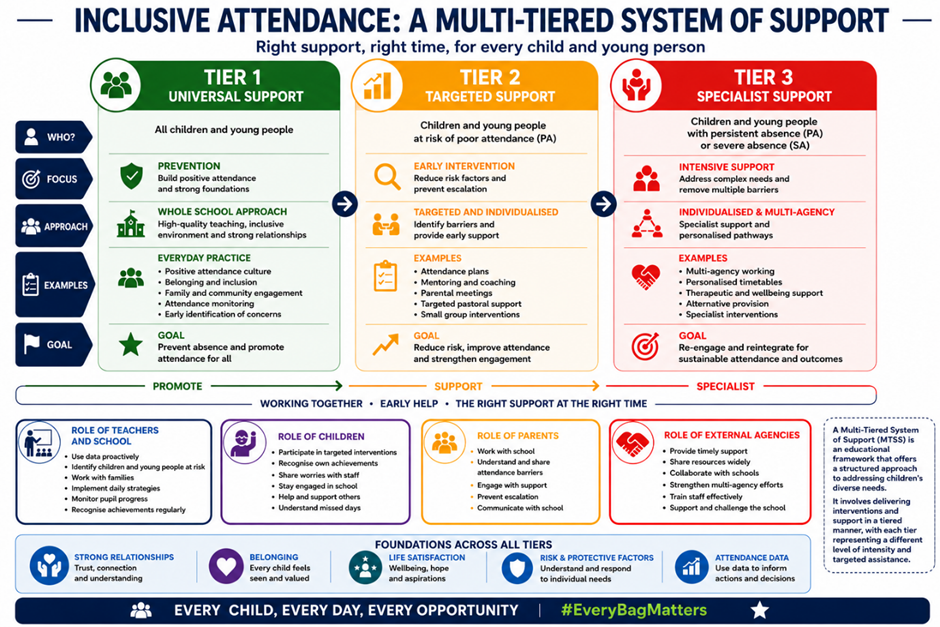
 Alumwell Infant School is proudly recognised as an Inclusive Attendance school. Our unwavering commitment to attendance centres around child-centric actions, evidence-informed practices and a shared understanding of everyone's roles and collective responsibilities to promote exceptional attendance.
At Alumwell Infant School, we are driven by an unwavering commitment to making school attendance a top priority, fully integrated with every aspect of school improvement. Using the Inclusive Attendance Model – the first and only accredited programme providing the pedagogy of practice – we support children and families to connect, belong and thrive.
The Importance of School Attendance
School attendance is not merely a requirement but a fundamental pillar of education. It plays a pivotal role in shaping academic success, personal growth and future prospects, making it an indispensable aspect of any educational system.
- Academic Achievement: Regular attendance directly correlates with academic success. Children who attend school consistently are more likely to keep up with the curriculum, perform better in exams, and improve their life outcomes.
- Knowledge Acquisition: School is where children acquire knowledge and skills that are crucial for their personal and professional growth. Missing days means missing out on valuable learning opportunities.
- Social Development: School provides a vital social environment for children to interact with peers, develop friendships and learn essential social skills. Consistent attendance ensures children remain connected to their peer group.
- Building Routine: School attendance establishes a structured routine in children’s lives, teaching them time management and responsibility, which are valuable life skills.
- Teacher Interaction: Regular attendance allows for meaningful teacher-child interactions. Teachers can provide personalised support, address questions and assess individual progress more effectively when children attend regularly.
- Preventing Knowledge Gaps: Frequent absences can lead to significant knowledge gaps, making it challenging for children to catch up with missed lessons, potentially resulting in long-term academic struggles.
- School Engagement: Children who attend school regularly are more likely to engage in extracurricular activities, sports and other enriching experiences that contribute to their overall development.
- Legal and Parental Responsibility: Parents or guardians are legally responsible for ensuring their child's regular school attendance. Failing to do so can lead to legal consequences.
- Community Wellbeing: High levels of school attendance contribute to the overall wellbeing of communities.